
SELF-BREAST EXAMINATION IN WOMEN
Introduction
Breast health is an important part of women’s overall well-being. Understanding the normal appearance and feel of your breasts can help you recognize unusual changes and seek medical advice promptly. Self-breast examination (SBE) is a simple way for women to become familiar with their breasts. Although it is not a proven screening test for reducing breast cancer deaths, breast awareness can help women notice changes that may require medical evaluation.
Important: Self-examination does not replace clinical breast examination, mammography, or other screening recommended according to your age and individual risk.
How to Perform a Self-Breast Examination?
1. Look at Your Breasts in a Mirror
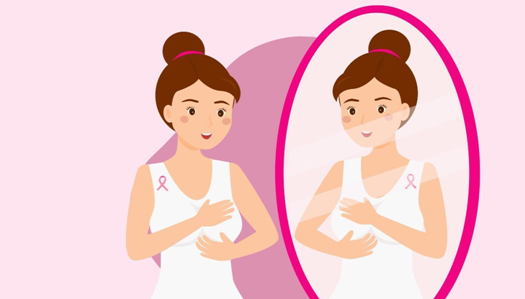
Figure 1. Observe your breasts in a mirror for changes in appearance
Stand in front of a mirror with your shoulders relaxed and arms by your sides.
· Observe both breasts for changes in size, shape, or symmetry.
· Raise both arms above your head and look for visible changes.
· Place your hands on your hips and press firmly to tighten your chest muscles.
· Look for skin dimpling, puckering, redness, swelling, or changes in the nipples.
2. Feel Your Breasts While Standing or Bathing
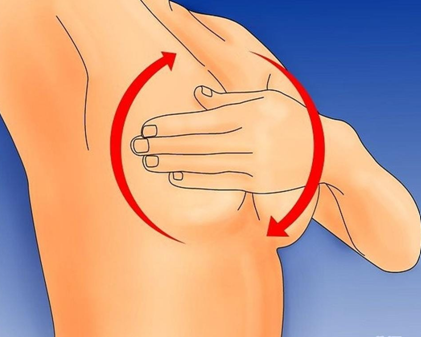
Figure 2. Use gentle circular movements and examine the full breast area
· Use the pads of your three middle fingers to gently feel your breast tissue.
· Move your fingers in small circular motions, applying light, medium, and firm pressure.
· Examine the entire breast, from the collarbone to the lower edge of the breast and from the breastbone to the armpit.
· Follow a consistent pattern so that no area is missed.
· Check the armpit area for any unusual lump or swelling.
Avoid squeezing or pressing too hard. The aim is to become familiar with your normal breast tissue, not to diagnose a condition yourself.
3. Examine Your Breasts While Lying Down
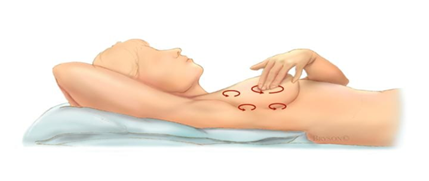
Figure 3. A comfortable lying position can help you examine the breast tissue
· Lie down comfortably and place a pillow under the shoulder on the side being examined.
· Place the corresponding arm behind your head.
· Use the opposite hand to examine the breast with gentle, small circular movements.
· Cover the entire breast area, including the region extending toward the armpit.
· Repeat the process on the other breast.
Notice any new lump, unusual thickening, or change from what is normal for you.
Warning Signs: Changes You Should Never Ignore
1. A New Lump or Thickening
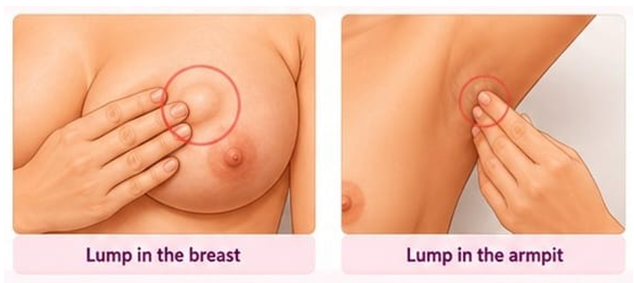
A new lump in the breast or armpit, or an area that feels different from the surrounding tissue, needs medical assessment.
2. Changes in Breast Skin
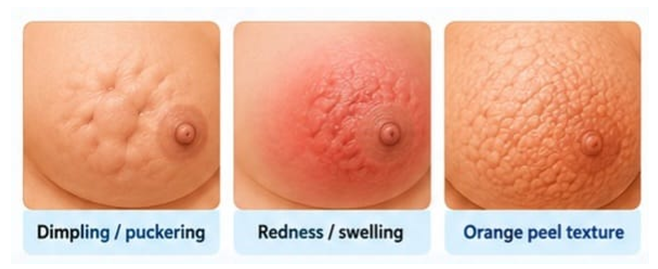
Look for dimpling, puckering, persistent redness, swelling, or skin that resembles the texture of an orange peel.
3. Nipple Changes
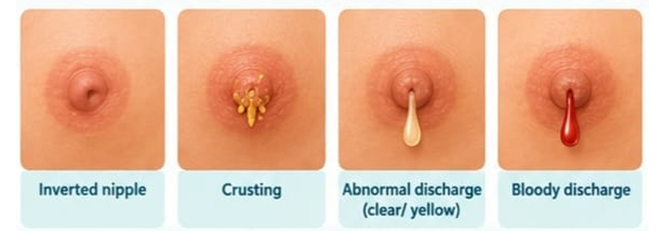
Watch for a newly inverted nipple, unusual crusting, or spontaneous discharge, particularly bloody discharge.
4. Changes in Size, Shape, or Sensation
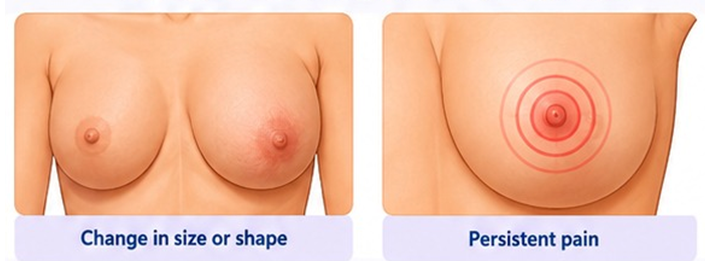
New swelling, a noticeable change in one breast, or persistent localized pain should be evaluated.
5. Persistent or Unusual Breast Changes
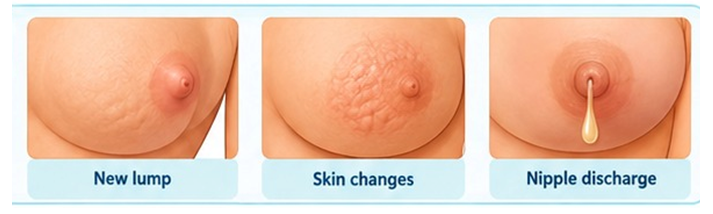
Even if a change is painless or a previous examination was normal, do not ignore a new or persistent symptom.
Remember: Most breast lumps are not cancerous. However, if you notice a new or unusual change, consult a healthcare professional promptly rather than waiting for your next self-examination.
When Should Women Examine Their Breasts?
Women who menstruate: If you choose to perform regular self-examinations, a convenient time is a few days after your menstrual period begins, when breast tenderness and swelling are often reduced.
Women after menopause: Choose a convenient time to become familiar with your normal breast appearance and feel.
Pregnant or breastfeeding women: Breast changes may occur naturally during pregnancy and breastfeeding. Nevertheless, a persistent or unusual lump should be assessed by a healthcare professional.
There is no requirement to perform a formal monthly self-examination as a proven cancer-screening method. The important principle is to know what is normal for you and seek advice when something changes.
Can Self-Breast Examination Prevent Breast Cancer?
Self-breast examination does not prevent breast cancer and has not been shown to reduce breast cancer deaths when used as a formal screening method. However, breast awareness can encourage women to recognize symptoms and seek timely medical evaluation. Women should discuss appropriate screening options, including mammography when indicated, with their healthcare provider. Screening recommendations depend on age, personal and family history, and individual risk.
Frequently Asked Questions
Is every breast lump a sign of cancer? No. Many breast lumps are benign. However, every new or unexplained lump should be medically evaluated.
Can breast cancer occur without pain? Yes. Breast cancer can present without pain, which is why new lumps and other unusual changes should not be ignored.
Is self-breast examination enough to detect breast cancer? No. Self-examination cannot reliably detect all breast cancers and is not a substitute for recommended screening or clinical evaluation.
What should I do if I notice a suspicious change? Arrange a medical consultation promptly. A healthcare professional may recommend a clinical examination and appropriate imaging or other tests.
Conclusion: Know Your Breasts. Recognize Changes. Seek Care Early.
Breast awareness empowers women to take an active role in their health. Learning what is normal for your breasts can help you recognize unusual changes and seek appropriate medical attention without delay.
Take-home message: Know your breasts. Recognize changes. Consult your doctor promptly. Early evaluation can make a difference.
Health information disclaimer: This article is intended for educational and awareness purposes only. It does not replace professional medical advice, diagnosis, or treatment.
Dr.Shilpa Gupta, Gynecologist